
A Complete Guide to Visiting Tirta Empul Temple: Ritual Rules & Visitor Tips
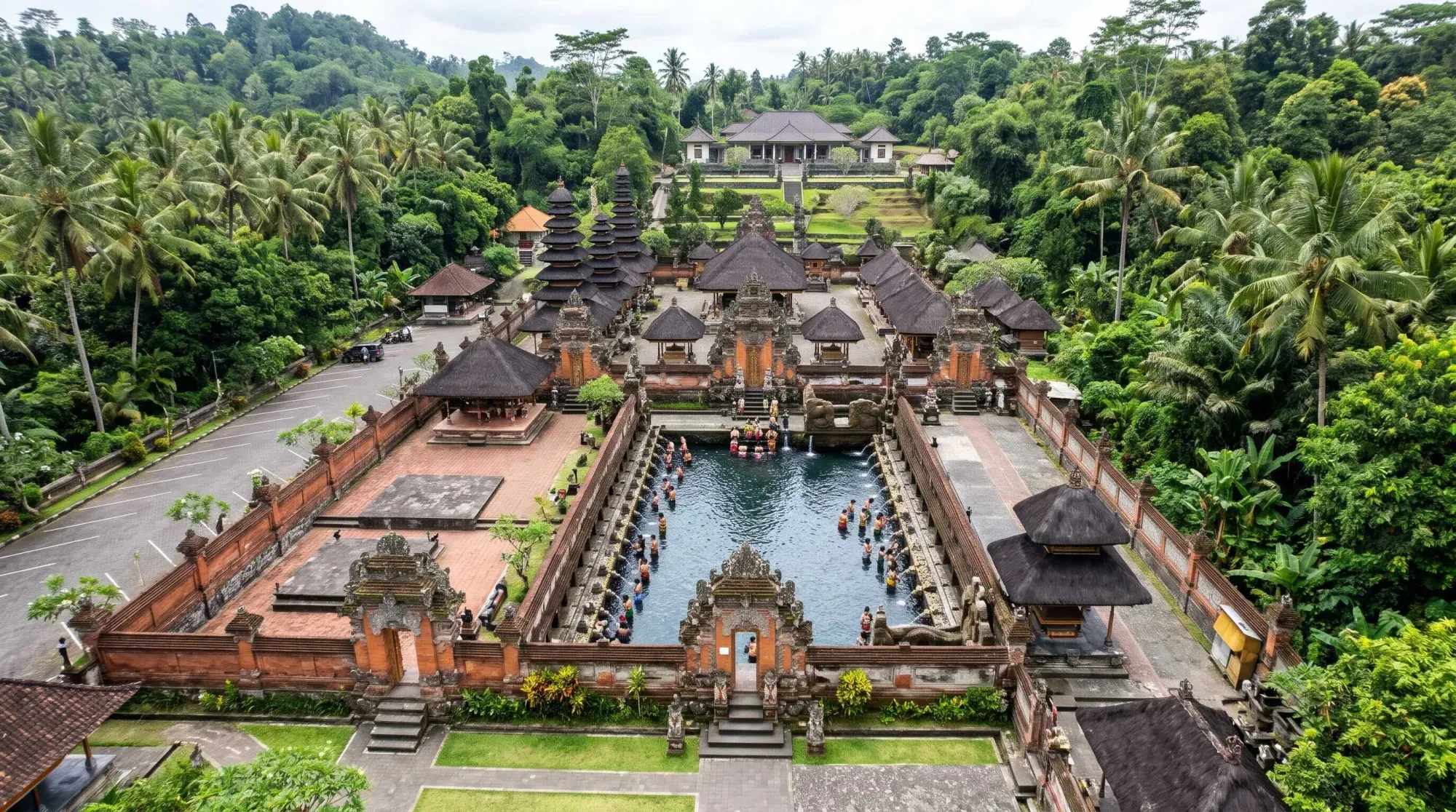
Tirta Empul Temple is a 10th-century Balinese Hindu water temple in Tampaksiring, Gianyar Regency, renowned for its active subterranean spring water and the Melukat purification ritual. The site functions as a major cultural landmark and an active place of daily worship centered on spiritual renewal.
Understanding Tirta Empul Temple: History and Spiritual Significance
Tirta Empul Temple stands as one of Bali’s principal Hindu water sanctuaries, centered around a natural spring pool that feeds its ceremonial bathing grounds. The name translates directly from Balinese, combining tirta (holy water) with empul (gushing spring).
Local tradition links the spring to the Hindu deity Indra, who pierced the earth to create a pure, healing water source to revive his army after King Mayadenawa poisoned the local river. Historical records trace the temple's establishment back to 962 AD during the Warmadewa dynasty. It remains a vital location for understanding Balinese Hinduism and the cultural role of water in spiritual cleansing.
What Makes Tirta Empul Bali Temple Special?
Unlike tourist sites designed solely for viewing, Tirta Empul operates as a living place of worship with daily religious practices.
The complex includes open-air courtyards, stone shrines, and two large purification pools filled directly by subterranean springs. Carved stone spouts direct water into these pools, where worshippers move systematically through a series of prayers during the Melukat ritual. For local Hindus, this water represents the removal of negative energies and the restoration of physical and mental balance.
Why Is Tirta Empul Known as a Purification Temple?
The spiritual importance of Tirta Empul is closely connected to the Balinese Hindu belief that water can help cleanse the mind and spirit.
In Balinese Hinduism, purification rituals are practiced to restore balance and prepare individuals for important spiritual or personal occasions. Sacred water is used in ceremonies at temples, homes, and other religious settings.
At Tirta Empul, the natural spring feeds the purification pools, allowing worshippers to perform Melukat in a setting deeply connected to local beliefs and traditions.
Although visitors may experience the ritual as a form of reflection, relaxation, or personal renewal, its religious meaning is much deeper for the Balinese community. Approaching the experience with cultural sensitivity helps preserve the significance of this sacred place.
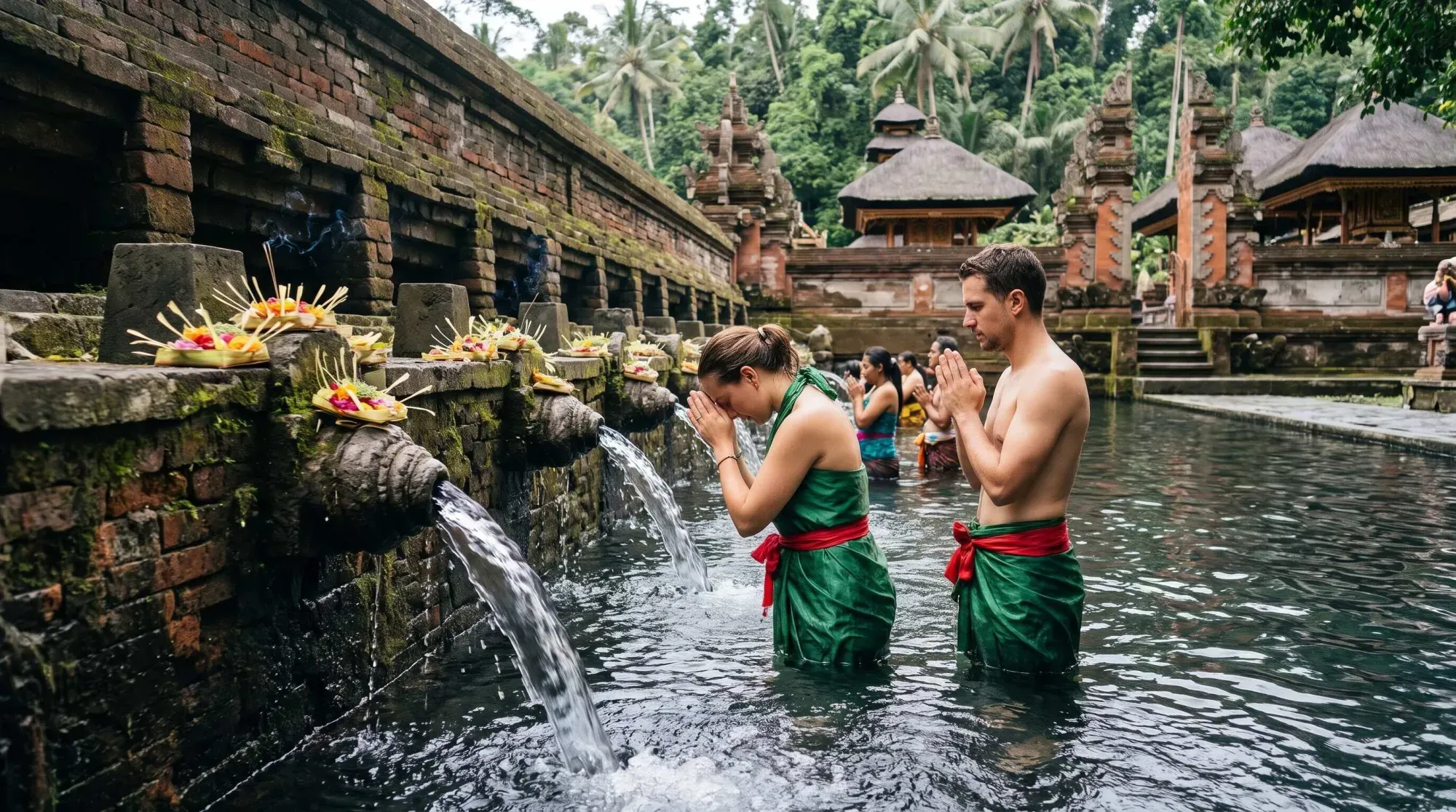
Image: Melukat ritual at Tirta Empul
The Purification Ritual (Melukat): What First-Time Visitors Need to Know
Melukat is a Balinese Hindu cleansing ceremony performed using holy spring water to clear spiritual impurities.
While international travelers can join the ritual, it is a formal religious act rather than a recreational activity. Adhering to local protocol ensures the site's sanctity is preserved.
How Does the Tirta Empul Purification Ritual Work?
Participants execute the Melukat ritual through a sequence of designated steps:
- Prepare before entering the pool: Change into a wet-use green sarong and secure a waist sash as required by temple staff.
- Approach the fountains respectfully: Enter the pool and move toward the first spout on the far left.
- Participate in the cleansing process: Bow under the water spout to submerge the head and face. Move sequentially down the row from left to right.
- Bypass restricted spouts: Skip the two spouts reserved specifically for funerary rites (Pitra Yadnya) and special priestly duties.
- Finish the ritual: Exit the pool area, change into dry clothing, and refrain from dripping water in the inner prayer courtyards.
Can Tourists Participate in Melukat at Tirta Empul?
Tourists may participate in Melukat if they follow entry conditions and wear appropriate ritual dress.
Travelers should observe the rules posted at the pool entrance. Hiring an accredited local guide provides clear context regarding spout selection, prayers, and cultural boundaries.
What Should You Wear for the Tirta Empul Water Temple Ritual?
Strict clothing rules apply to all visitors:
- General Temple Entry: A clean, dry sarong and sash covering the legs below the knees.
- Water Entry: A distinct green rental sarong specifically required for pool immersion.
- Post-Ritual Essentials: A dry change of clothes and a small towel.
- Footwear: Slip-resistant sandals suited for wet stone surfaces.
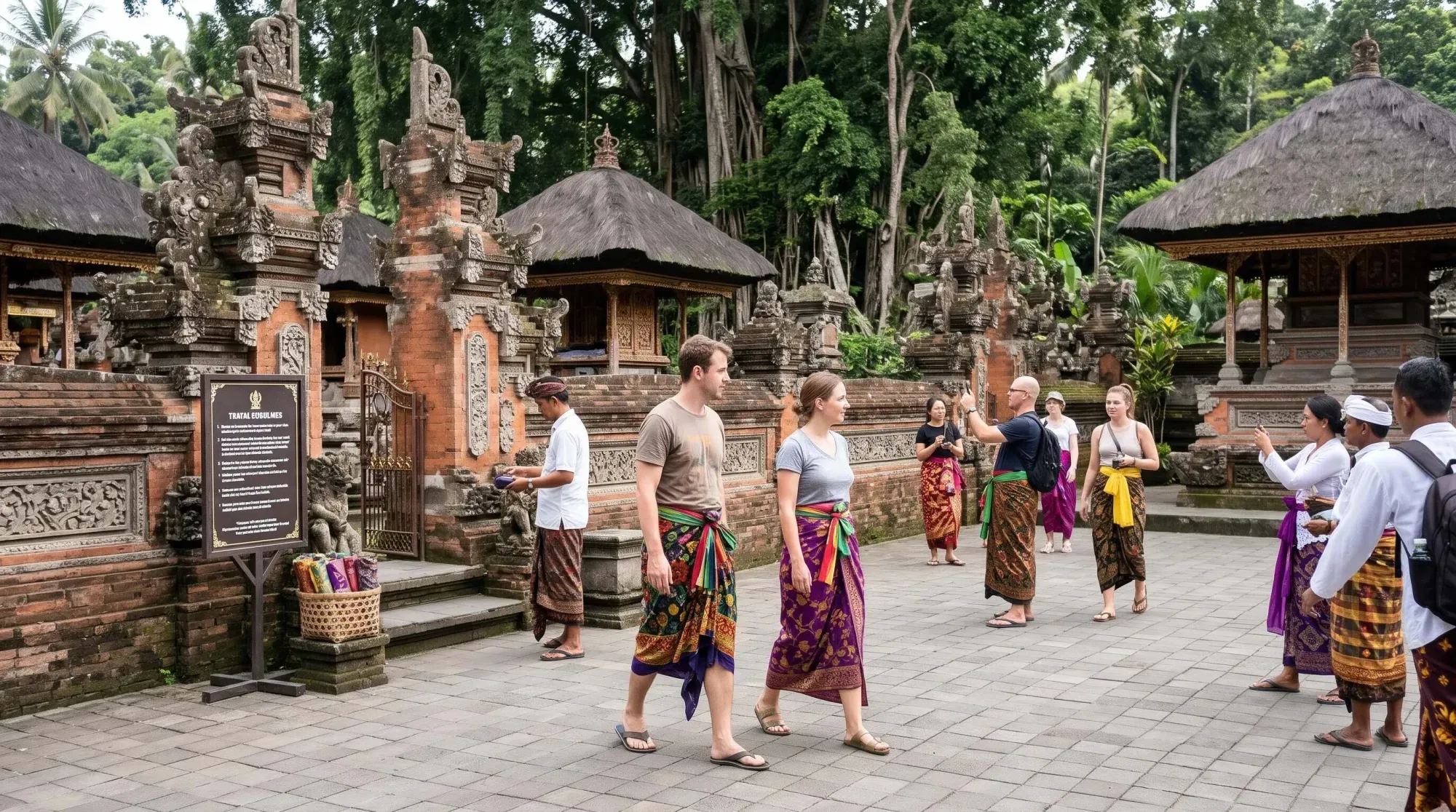
Image: Dresscode at Tirta Empul
Visiting Tirta Empul Temple: Essential Tips for Travelers
1. Visit Early to Enjoy a More Peaceful Experience
Arrive between 08:00 AM and 09:30 AM to complete the ritual before large tour buses arrive. Early visits offer shorter waiting times at the spouts and lower ambient noise.
2. Check Entrance Fees and Opening Hours Before You Go
Operating hours generally run from 08:00 AM to 06:00 PM daily. Ticket counters accept Indonesian Rupiah for standard entry, locker rentals, and pool sarongs.
3. Respect Religious Customs and Temple Etiquette
Observe these basic cultural guidelines during your stay:
- Dress modestly at all times across all courtyard zones.
- Avoid stepping on or disturbing canang sari offerings placed on the ground.
- Do not stand directly in front of worshippers during prayer.
- Per traditional Balinese Hindu rules, individuals with open wounds or actively menstruating are requested to refrain from entering sacred zones.
4. Prepare for Cold Water and Physical Fatigue
Spring water flows continuously at ambient subterranean temperatures, which can feel cold during extended immersion. Wet stone steps present a slip risk, so move cautiously throughout the pool area.
5. Bring Cash and Pack Light
Carry local currency in small bill denominations for locker fees, towel rentals, and sarong deposits. Store electronics in a waterproof dry bag near the pool edge.
6. Allow Enough Time to Explore the Temple
Allocate 90 to 120 minutes total. This provides sufficient time for line queues, changing clothes, performing Melukat, and viewing the inner Jeroan courtyard.
7. What Can You Visit Near Tirta Empul Temple?
Combine your visit with nearby central Bali landmarks:
- Gunung Kawi Temple (2 km): An 11th-century cliff-face shrine complex located in the Pakerisan River valley.
- Tegallalang Rice Terraces (8 km): Terraced agricultural fields utilizing the traditional Balinese subak irrigation system.
- Ubud Center (15 km): Regional center for dining, art galleries, and modern wellness centers.
- K-Club Ubud (6.6 km): A luxury resort and wellness destination located 12 to 15 minutes away, ideal for transitioning from morning sightseeing to an afternoon relaxation experience.
Recharge at K-Club After Visiting Tirta Empul Temple
Following the cold-water exposure and physical walking required during Melukat, transitioning to a calm environment allows time to dry off, rest, and process the morning's cultural experience. Located in the surrounding Ubud area, K-Club Ubud provides a structured space dedicated to hospitality, wellness recovery, and dining.
From Spiritual Exploration to a Relaxing Wellness Experience
Moving from an active morning temple tour to a peaceful leisure environment balances physical exertion with necessary rest. Access to hot showers, comfortable seating, and dedicated dining supports full recovery before continuing travel across Bali. Taking time to slow down helps process the cultural depth of the morning without rushing into the next destination. This seamless transition transforms a demanding sightseeing schedule into a well-paced, restorative travel experience.
Explore Wellness and Longevity at K-Club Ubud
Wellness in Bali encompasses structured movement, physical recovery, and quiet relaxation beyond standard spa options. K-Club offers facilities for fitness, Pilates, and guided recovery sessions set against a natural forest backdrop. Guests can engage in tailored programs designed to alleviate muscle fatigue and restore mental clarity after outdoor activities. Checking class schedules or booking sessions in advance ensures access to targeted wellness amenities during your visit.
Enjoy Healthy Dining After Your Temple Visit
Completing a morning cultural excursion is naturally complemented by a sit-down meal in a relaxed tropical setting. On-site dining venues present fresh, light menu options tailored to support individual dietary preferences and wellness goals. Guests can refuel with nutrient-dense dishes crafted from locally sourced ingredients while reflecting on their temple journey. The relaxed atmosphere provides an ideal backdrop for gathering with travel companions before continuing your daily itinerary.
Is K-Club Ubud Close to Tirta Empul Temple?
Yes. K-Club Ubud is located approximately 6.6 km from Tirta Empul Temple (about a 12 to 15-minute drive) and just 3 minutes (1.3 km) from Alas Harum.
Because of this close proximity, staying at K-Club Ubud serves as a practical base for exploring the area. Guests can complete the morning Melukat ritual at Tirta Empul before tour buses arrive, stop by neighboring attractions like Alas Harum, and return to their private villa or luxury suite within minutes. Choosing to stay nearby eliminates long transit times from South Bali or central Ubud, allowing for a seamless blend of cultural exploration and high-end relaxation.
Make Your Bali Itinerary More Meaningful
Pairing the historic Melukat purification ritual at Tirta Empul with an afternoon of recovery at K-Club Ubud combines rich cultural discovery with functional travel comfort. This dual approach ensures a balanced itinerary that respects both local traditions and personal relaxation needs. By dividing the day between spiritual exploration and physical recovery, travelers experience a more comprehensive view of modern Bali. Thoughtful planning ultimately transforms a standard sightseeing trip into a deeply rewarding, well-rounded journey.
Planning your visit to Tirta Empul Temple? Explore K-Club Ubud and discover a more relaxed way to experience the cultural and wellness side of Bali.



A Luxurious
Serene Ubud
Escape
- Home
- About
- THE VILLAS & KANVA
- DINING
- Experiences
- FACTSHEETS
- Wellness
- Wedding
- Special Offers
- Gallery
- Contact Us
- Press Kits
Award

K-Club Ubud
Jalan Raya Cebok, Desa Kedisan, Kecamatan Tegallalang, Kabupaten Gianyar, Bali 80561, Indonesia.
+62-877-0003-3888
https://www.kclububud.com
info@kclububud.com
Copyright© 2026 K-Club Ubud. All rights reserved. Powered by Mindimedia